

The nights are getting cooler, and for the first time my plants won't spend winter on the balcony. They're in the greenhouse now. It's my first winter out there, so this isn't a how-to. I’ll go through what several unheated winters on the balcony taught me, the minimum temperatures I now use, and my plan for this winter.
What my balcony winters were like
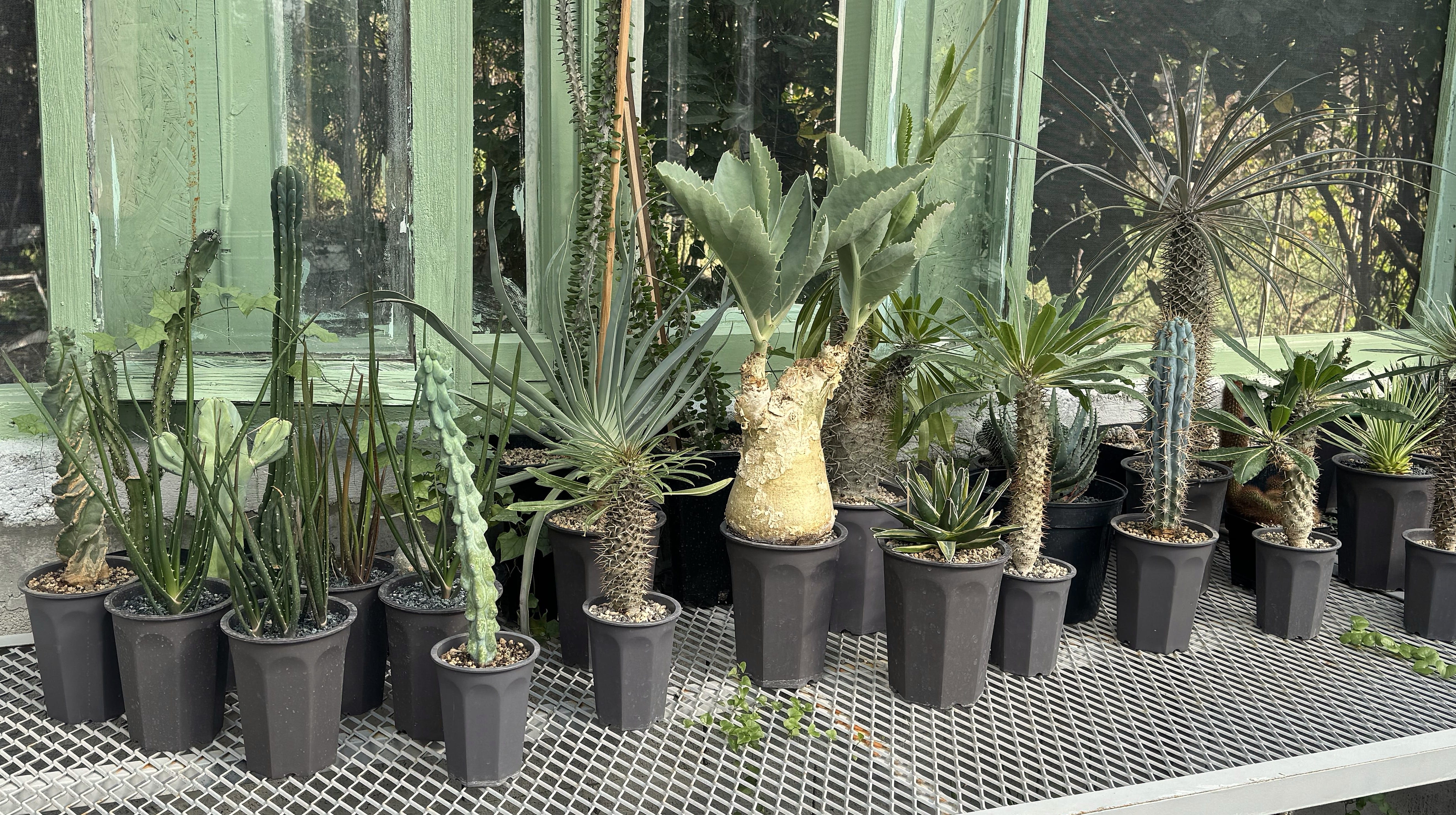
The balcony is closed, glazed and faces north-east, so it never froze outright, but it never got much sun either. A few shelves ran under grow lights to make up for it. Most of the winter it sat at 5–10°C (41–50°F), with a couple of weeks close to 0°C (32°F). Humidity stayed around 60% the whole time, because a closed glass box in winter doesn’t dry out.
I kept almost everything bone dry, as most guides advise. That was enough for the cacti, but not for the tropical caudex plants.
What died, and why
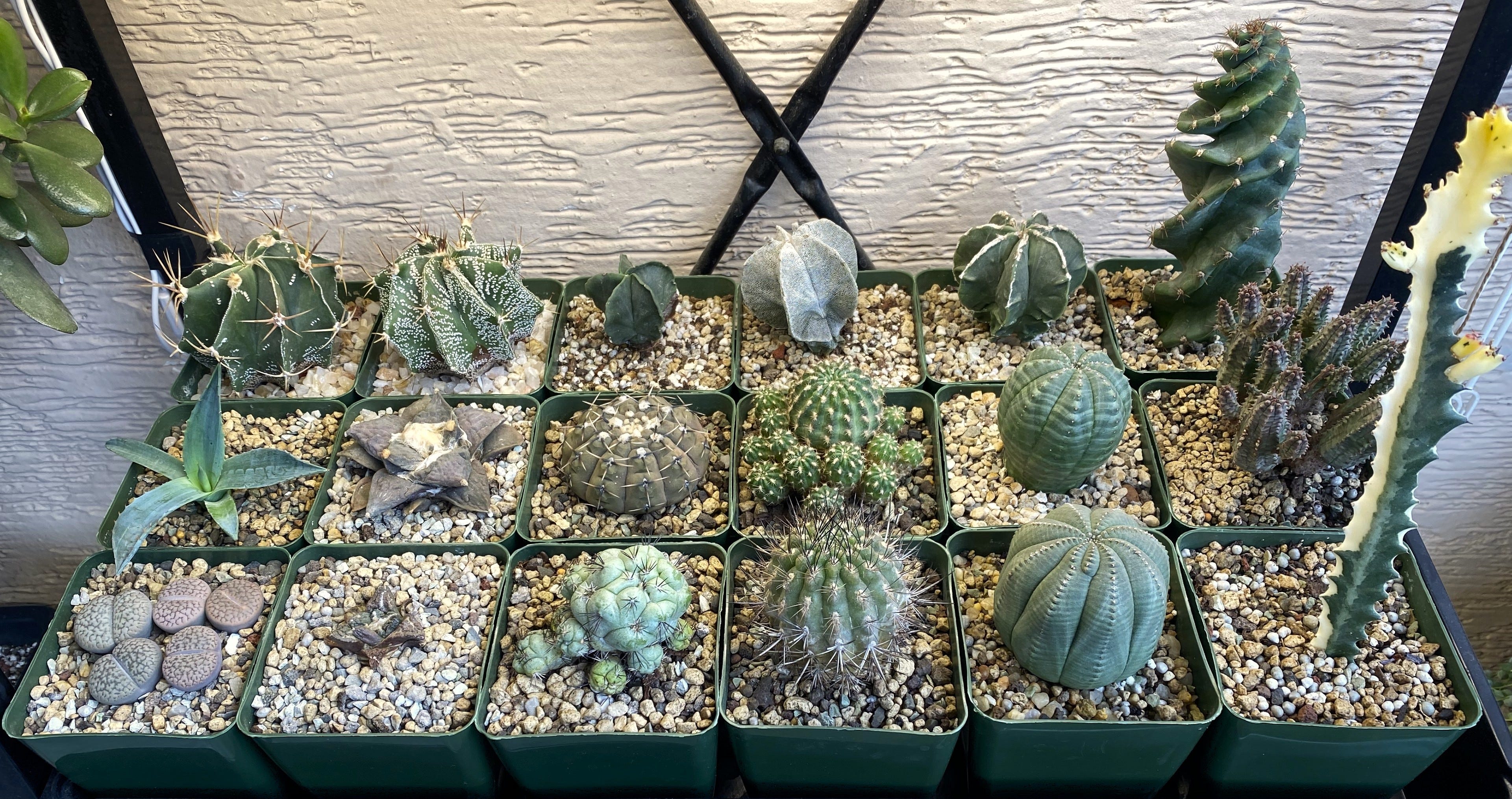
Adenium. Every single one, over several winters: Adenium obesum subsp. arabicum seedlings and mature A. obesum plants. With my Adeniums the caudex went soft from the base up, while the top stayed firm for a while and still looked fine. By the time the top gave way, it was too late. I don’t have a single photo of them left.
Pachypodium. I lost several Pachypodium rosulatum var. cactipes, a P. horombense, and one that was either baronii or windsorii (I was never fully sure which). These two are among the least cold-tolerant Pachypodiums, and in my experience anything kept below about 8°C (46°F) in humid air was in trouble.
Fockea. I had three mature plants and now have one. I also lost both of my Fockea seedlings.


Cold and damp together
Over several winters and several species, I saw the same thing. Adeniums and Pachypodiums died when humidity and low temperature came together. Keeping the soil dry wasn’t enough, because the air wasn’t dry. At 60% humidity and near-freezing temperatures, the roots weren’t active and the tissue stayed cold and wet for weeks. A cold night in dry air seemed fine for them, but weeks of cold, damp air were not.
The cacti were very different. Almost all of mine took 0°C (32°F), kept dry, with no problem. The only one I remember losing to cold was Ortegocactus macdougallii, one or two plants.
Minimum winter temperatures by plant
I checked my experience against PukuBook, a Japanese succulent database that lists a cold-hardiness figure for each species. Those figures are survival limits for a dry plant, not comfortable temperatures.
Adenium obesum: listed 10°C (50°F). The highest on this list, and I lost every one I had.
Pachypodium baronii and P. windsorii: listed 5°C (41°F). Mine died in damp air somewhere below 8°C (46°F). I trust my losses over the listing.
Pachypodium rosulatum, including var. cactipes: listed 5°C (41°F). Stop watering once nights drop below 10°C (50°F).
Euphorbia obesa: listed 5°C (41°F). Only a light surface watering every few weeks in the cold.
Fockea edulis: listed 0°C (32°F). About where my balcony got to in the coldest weeks, and I lost two of my three there.
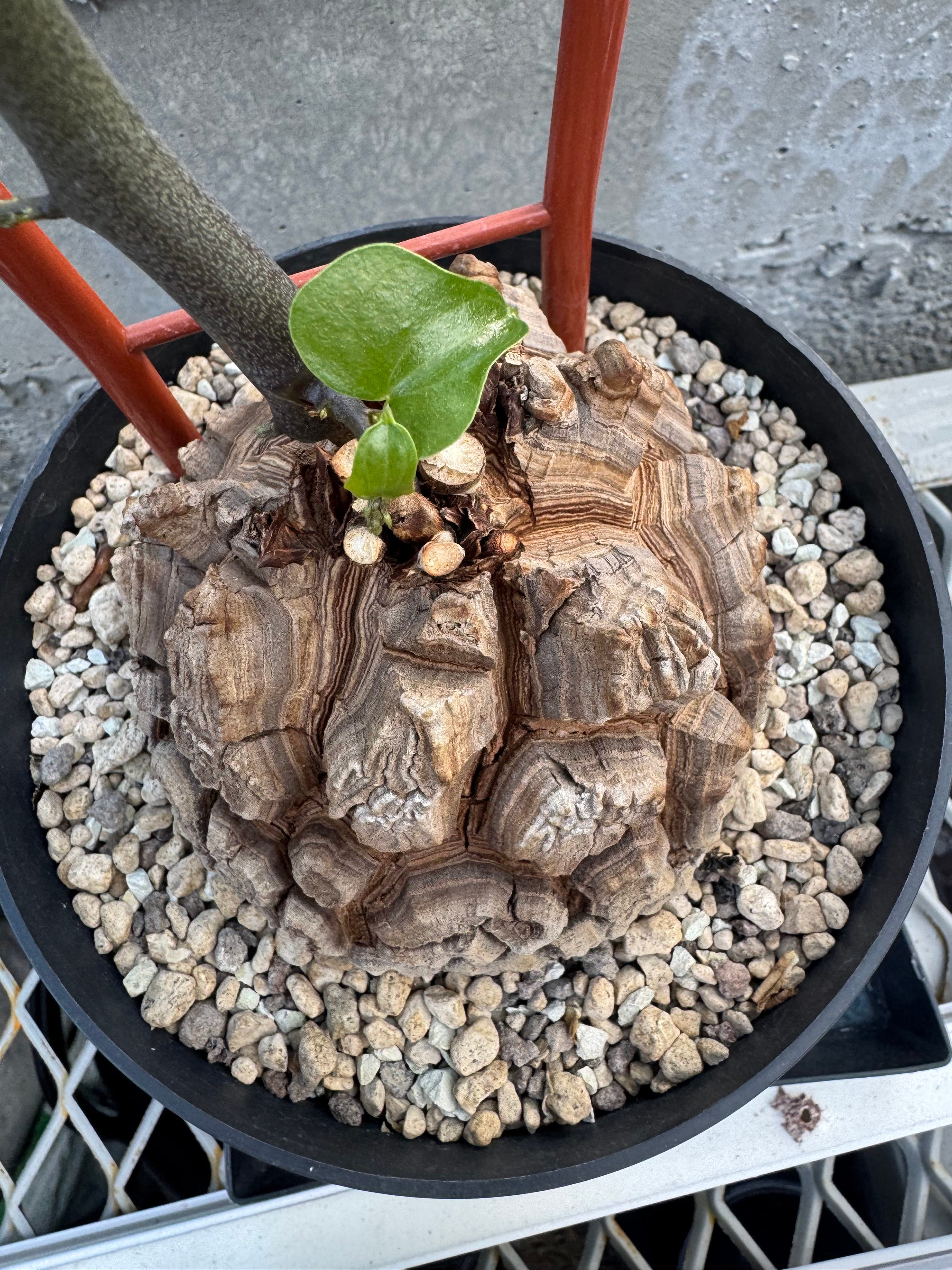
Dioscorea elephantipes: listed 5°C (41°F). It grows in winter, so it needs light and water while everything else rests.
Most cacti, kept dry: 0°C (32°F) in my experience. Fine for nearly all of mine. Ortegocactus macdougallii was the exception.
My plan for the first greenhouse winter
In the greenhouse I can control the temperature, which I never could on the balcony. Nothing is installed yet, so this is just the plan.
Insulate the windows. I haven’t settled on the material yet and am still asking around. If you’ve insulated a small greenhouse, I’d like to hear what worked.
Run an electric heater on a thermostat set to 8°C (46°F). Every mature plant I still have came through balcony winters near 0°C, so 8°C in drier air should be a comfortable margin. The thermostat gets bought before November.
Keep the air moving with a small fan during the day. The big summer fan on a timer is too much now. The goal is just to stop cold, damp air settling around the pots.
Give the seedlings the warmest spot. The mature plants are proven at these temperatures; this year’s seedlings aren’t. If the warmest corner isn’t enough, they come indoors under grow lights, the same kind of setup I ran on the balcony. Adeniums or baronii would need that treatment too, since 8°C is below what they want.
What’s next
I’ll log temperatures through the winter and report back in spring: what the heating actually held, what it cost to run, which plants came through, and what I’d change. If you’re also facing your first heated winter, tell me about your setup in the comments.
Next post: Dioscorea elephantipes, which grows through the winter.