

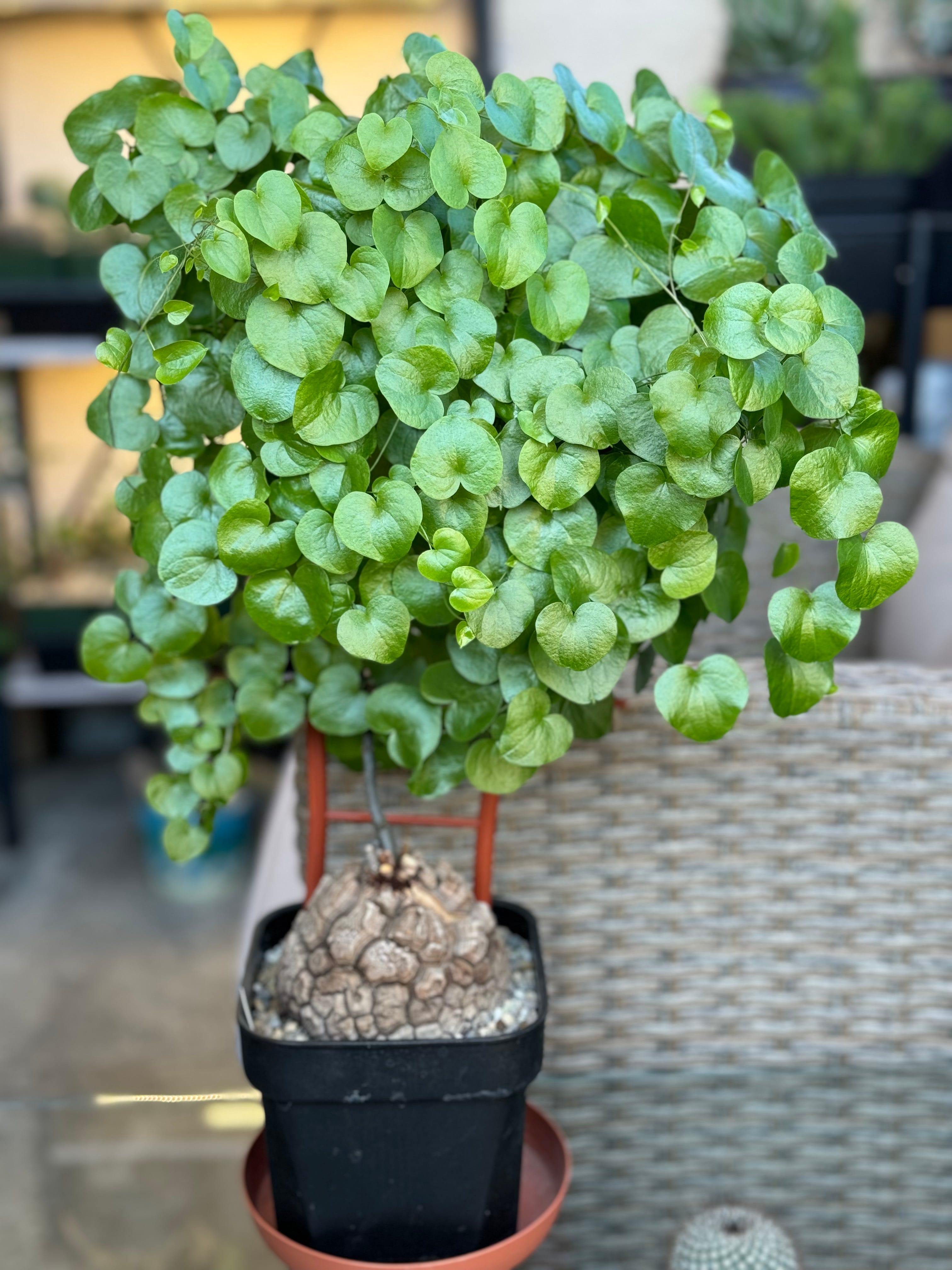
In autumn most of my greenhouse slows down. The cacti and most succulents grow less every week, and by November most of them have stopped. Dioscorea elephantipes does the opposite. This is the winter-growing caudex from South Africa whose tuber is covered in corky, cracked plates like a tortoise shell. Just as everything else winds down, a thin vine pushes out of the top of each tuber, and they grow straight through the cold months.
My oldest seed-grown Dioscorea is almost three years old. I watched it go from a flat, papery seed to a tuber you can hold in your palm. Growing plants like that from seed is mostly what this newsletter will be about, and they’re the plants I’m proudest of.
How it started
I didn’t start this hobby. In early 2020, during the pandemic, my spouse began bringing home cacti, succulents and all sorts of other plants. The desert plants pulled me in, and before long I was the one looking after them.
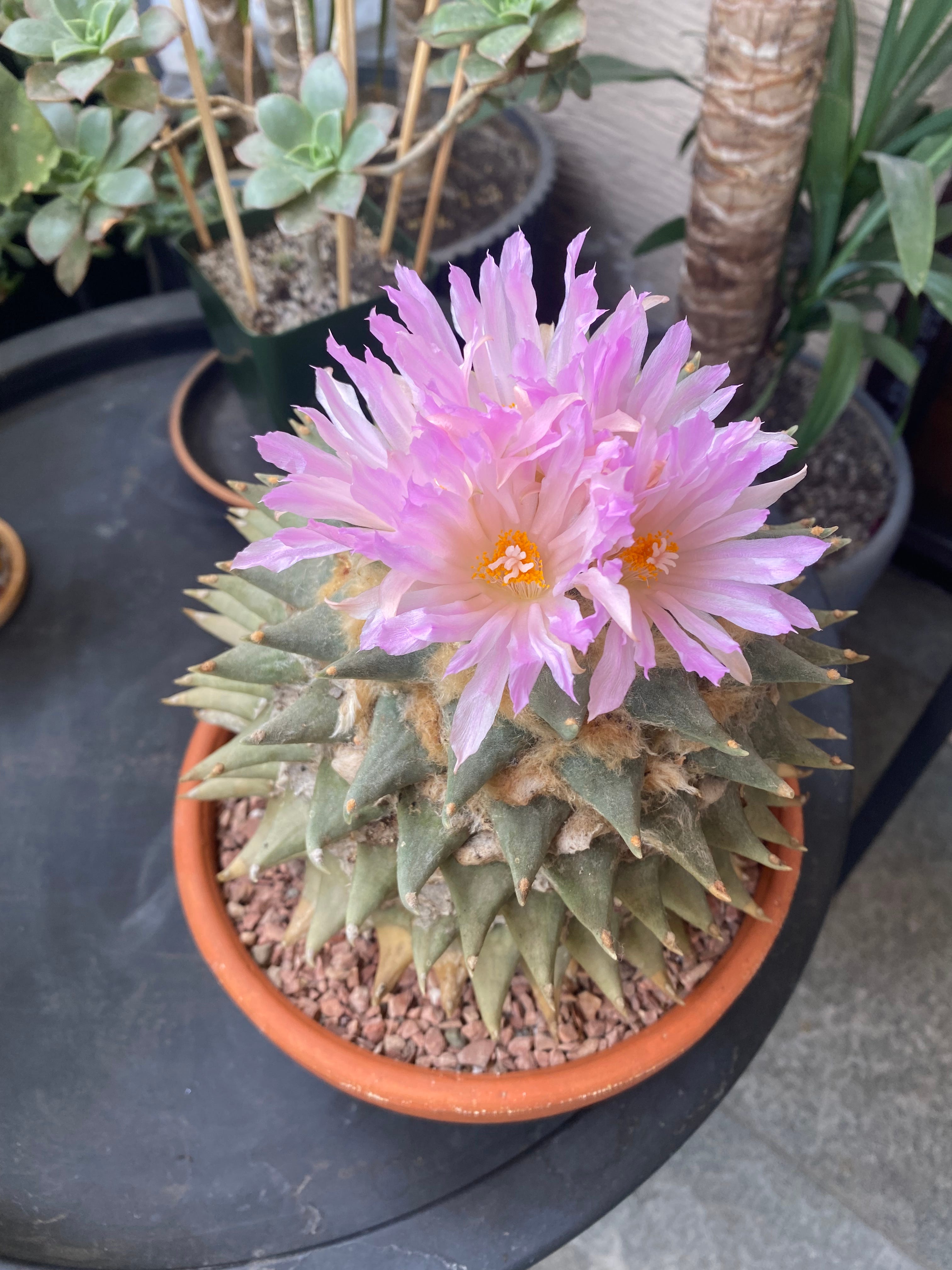
By 2022 there were 60 or 70 plants on the balcony. Most were common ones, and I’ve since given most of them away. One that stayed was an Ariocarpus retusus, and it flowered that October.
The buying phase
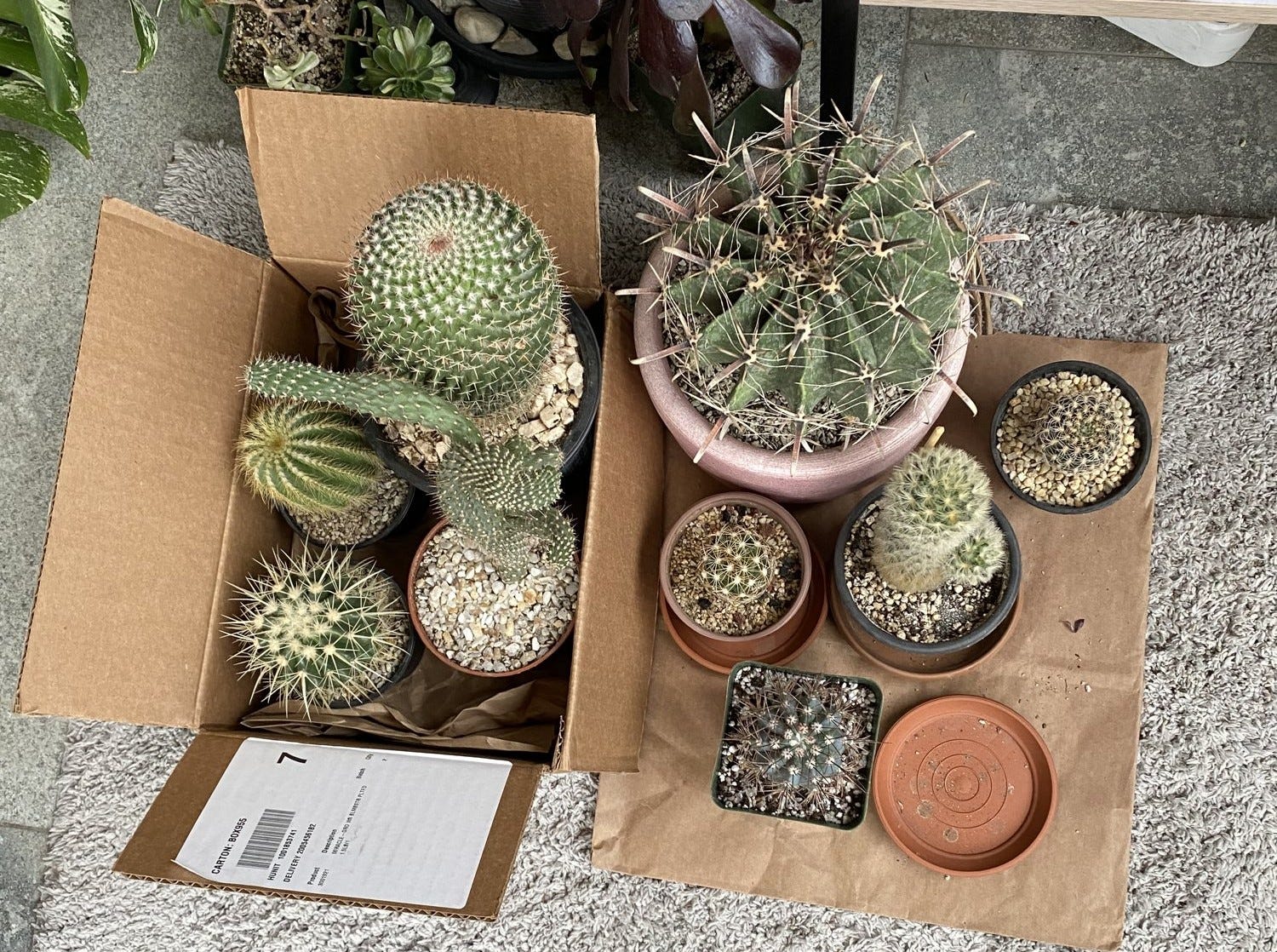
For the next couple of years I bought plants, lots of them. Boxes of cacti arrived, and nursery trips came home in shopping bags.
A mature caudiciform looks impressive, but you don’t know much about how it grew. The Dioscorea I bought from a grower in France was already about five years old when it reached me. All that growing happened somewhere else. Almost anything is for sale now if you can afford it, and over time buying just got less interesting for me.
Why I switched to seed
I started sowing as an experiment, and over several years the results have been mixed. Some trays failed outright. Others worked better than I expected: Dioscorea elephantipes, Dorstenia gigas, Welwitschia mirabilis and several aloes have all come through for me. I’ve enjoyed watching them grow much more than unpacking a finished plant.
The first seed trays
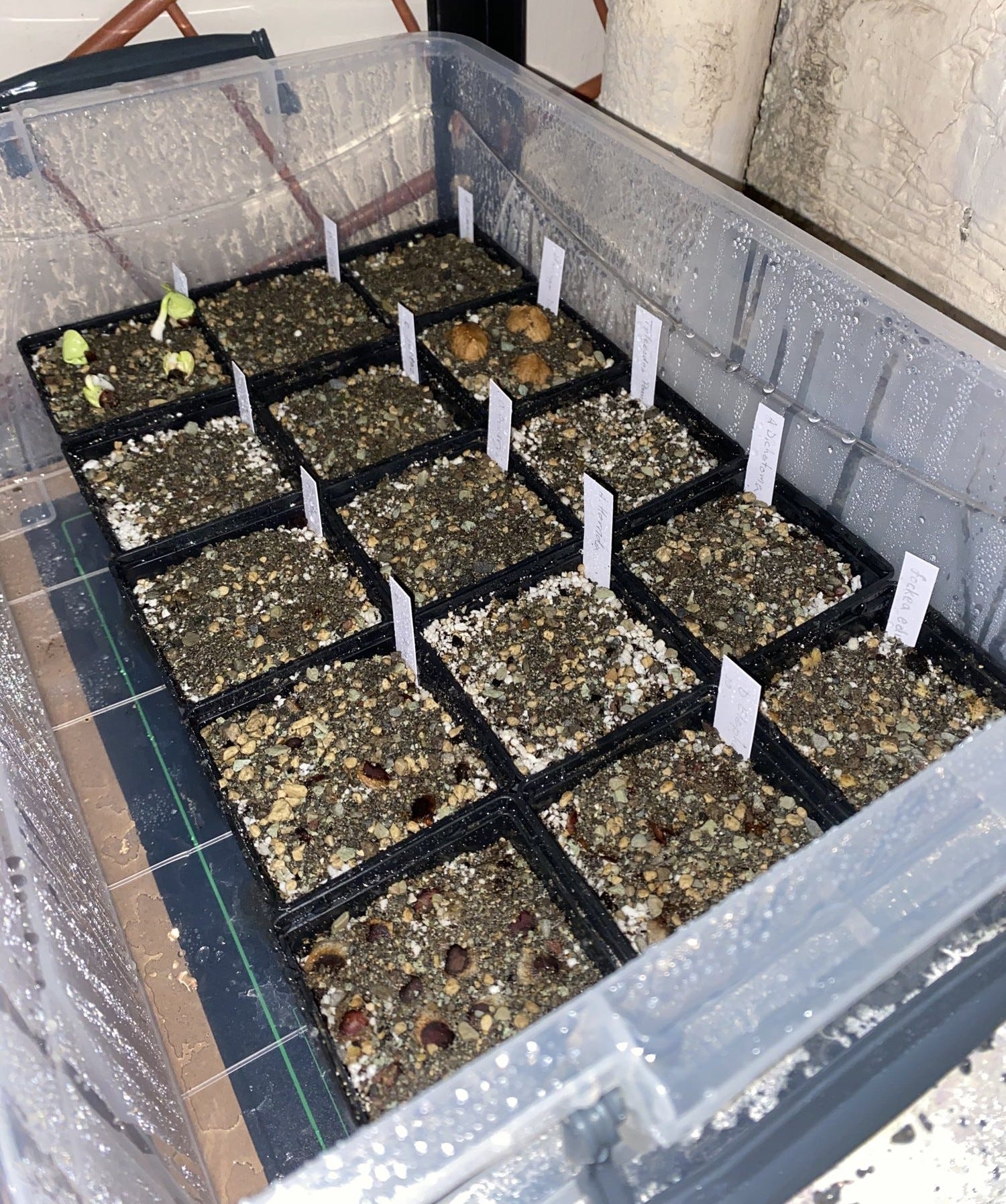
I sowed my first serious batch on January 2, 2024, in a covered propagation box with every pot labeled. That batch included Welwitschia mirabilis, Dioscorea elephantipes, Aloe dichotoma (now Aloidendron dichotomum), Agave horrida and Moringa drouhardii. Germination took anywhere from 3 to 14 days depending on the species, and some took longer. The Operculicarya never came up. Many of the cacti I sowed were lost too, because seedlings need daily attention that work trips didn’t allow.
Most of what I knew back then came from Japanese growers’ blogs. They had far more species-specific detail than anything I found in English. They gave germination temperatures for individual species, and the soil mixes people actually used, which I replicated with ingredients I could buy locally. For hard seed, they showed exactly how growers handle scarification and cold stratification. That kind of detail is still hard to find in English, and I’ll be passing a lot of it on here.
What I get from growing from seed
For every plant in my seed trays I know the sowing date, where the seed came from and every repot. I also get to see the caudex slowly build up over the seasons, which you never see when you buy a plant.
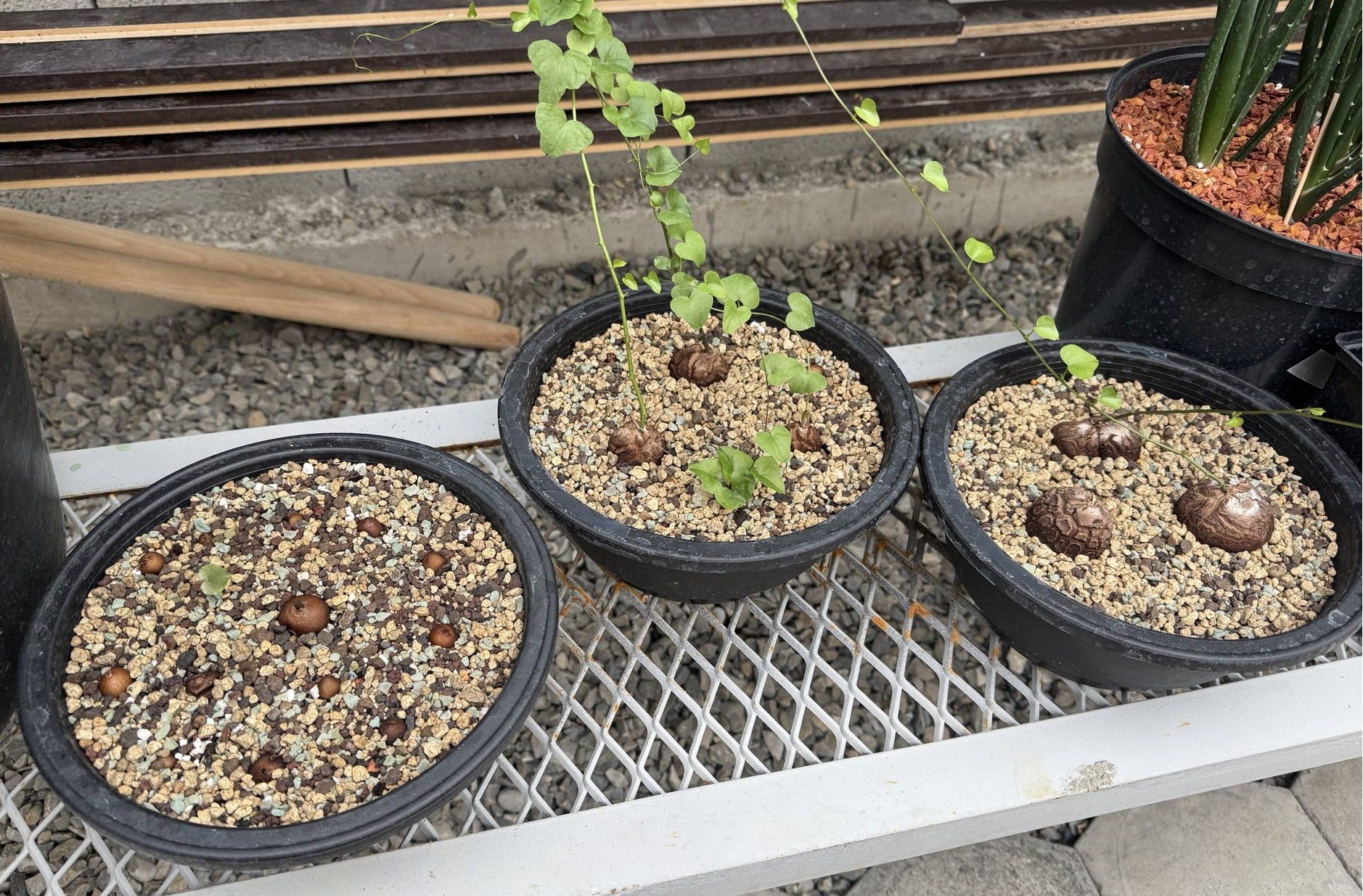
Today: a small heated greenhouse
The collection outgrew the balcony, and everything now lives in a small greenhouse that I heat through the winter. The mature plants are there too, but I usually check the seed trays first.

What’s coming
In the coming months I’ll write about how I heat the greenhouse and what it costs, Dioscorea elephantipes care through its winter growing season, the soil mix I use for caudex plants and seedlings, and growing Pachypodium from seed. Many of these plants have been photographed since 2022, so you’ll often see the same plant across several years.
If you grow caudiciforms, or want to start them from seed, subscribe and follow along.