

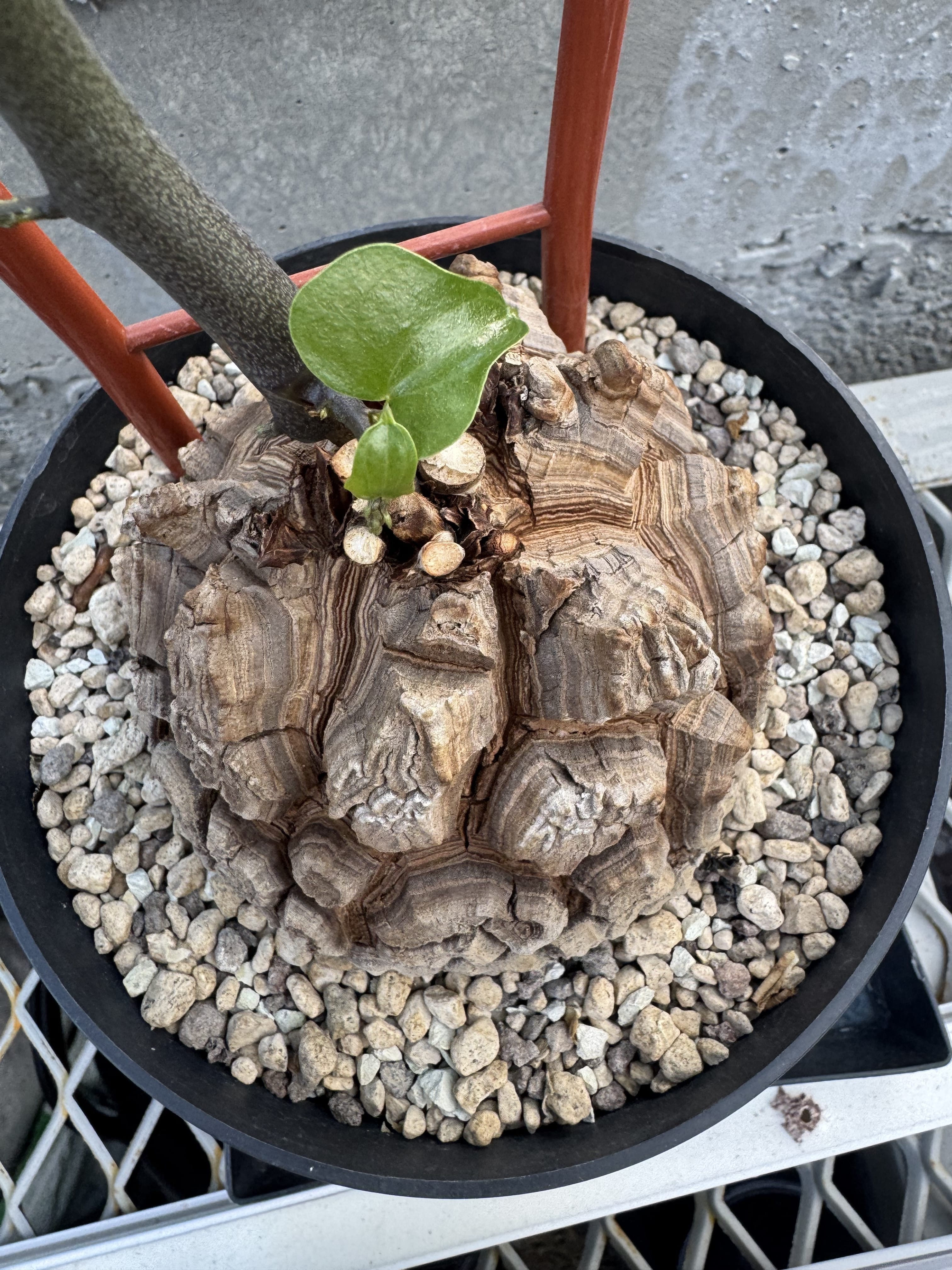
October is when I look at every pot in the greenhouse. The Dioscoreas are pushing new shoots, the Pachypodiums will start dropping leaves in a few weeks, and this is the last moment to fix anything before winter. This year it matters more than usual, because it’s my first winter in the greenhouse instead of the balcony. Almost every winter loss I’ve had came down to soil staying wet for too long in cold, humid air. So before the thermostat goes on, I want to write down what’s in my pots and why.
I’ll link back to this post a lot. It has my own mixes plant by plant, the Japanese mixes I learned from growers’ blogs years ago, and a table comparing all of them.
How my mix changed: from 50/50 to 70/30
When I started, I used what most beginner guides suggest: about half organic, half mineral. My usual recipe was perlite 50%, peat 25% and ordinary potting soil 25%. In some pots I also put a layer of lava rock at the bottom for drainage. It looked fine for a few months.
Then late autumn came on the closed balcony. Humidity sat around 60%, temperatures were 5–10°C (41–50°F), and those pots stayed damp for days after watering. The surface went green with algae. Summer was no better, because the mix also dried too slowly when the plants actually wanted water and air at the roots. I lost plants in both seasons before I accepted that the mix was the problem.
Over the next couple of years I moved to 70% mineral and 30% organic as my starting point. From there I adjust per plant, and most of my pots now end up between 70% and 80% mineral. I also stopped putting lava rock in the bottom of pots. With a mix this open, I find it unnecessary. I mix by the scoop and by eye. The ratios below are what I aim for, but I’ll often add a handful more pumice to a batch if it feels too soft in the hand. If you want precision, measure by volume, not weight. Peat and perlite weigh almost nothing compared with pumice.
What goes into my caudex soil mix
Perlite. I buy the coarse grade, 5 mm (about ¼ in) or bigger. Fine perlite packs down and floats to the top after a few waterings.
Pumice. Plain local pumice in mixed sizes. Heavier than perlite, so it keeps tall plants steady in the pot.
Peat and coco coir. These hold the water. I like having both. Coir rewets more easily after the pot dries out completely.
Compost (humus). Only a small amount, for some life in the mix.
Lava rock, zeolite and river sand. Only in my Pachypodium namaquanum mix. Sometimes a little vermiculite or charcoal in other batches, never more than a few percent.
Top dressing. Most of my pots get a top layer of mixed mineral grit: pumice, lava rock and zeolite. That’s why the surface looks much the same in most of my photos, whatever mix is underneath.
Slow-release fertilizer mixed in. Recently MagAmp K, before that a 10-11-10 cactus and succulent granule.
How to read the mixes below: all percentages are by volume. Mineral means perlite, pumice, lava rock, sand and the Japanese soils. Organic means peat, coir and compost. Slow-release fertilizer goes into every mix and isn’t counted.


Soil mix for Dioscorea elephantipes

My mature Dioscorea and most of my seedlings are in 80% mineral now, the same as most of my caudex plants. I have a lot of seedlings, though, and they aren’t all in one mix. The youngest get 70/30 with most of the organic part as peat, because their small tubers swell faster when the soil doesn’t dry out completely between waterings. Some older seedlings are still in the wetter mix from my Dioscorea post (perlite 40%, pumice 20%, peat 20%, coir 15%, compost 5%, so 60% mineral), and a few are in something more mineral than 80%. I’m moving them across as I repot, in July and August while they’re dormant. The full care routine is in my Dioscorea elephantipes post.
Soil mix for Pachypodium, Dorstenia gigas, Welwitschia and Fockea
Pachypodium namaquanum
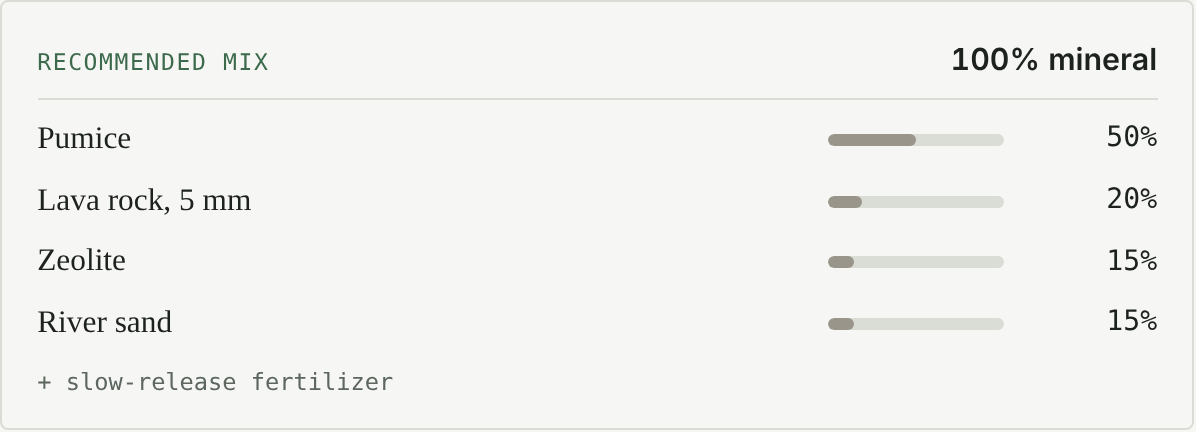
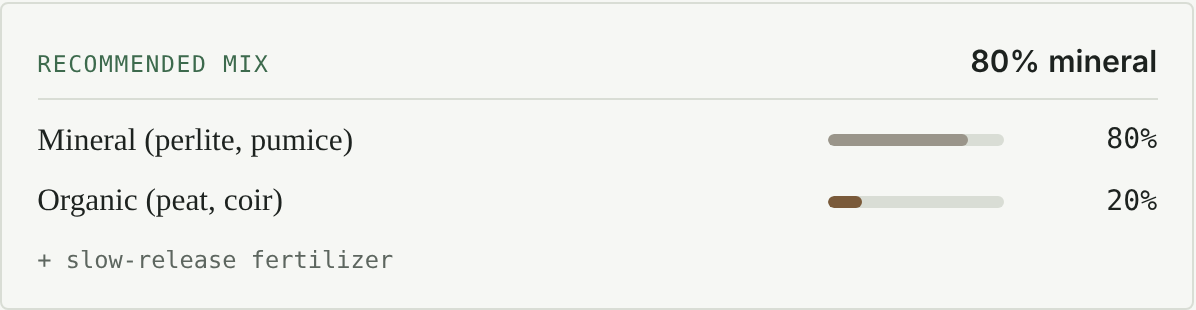
This is the one plant with its own mineral-only recipe. My mature namaquanum spent two years in a Japanese akadama mix (more on that below) until it needed a bigger pot, and has been in this mix since. It’s the Pachypodium I’m most careful with, because I lost a seedling of it last winter to cold and humidity, even kept dry.
Pachypodium geayi

Seedlings go in my 70/30 base. My big geayi, bought when it was already about 8–9 years old, gets more mineral, around 80–85%. It also did well in the akadama–kanuma–perlite mix further down. It’s a forgiving plant compared with namaquanum.
Dorstenia gigas
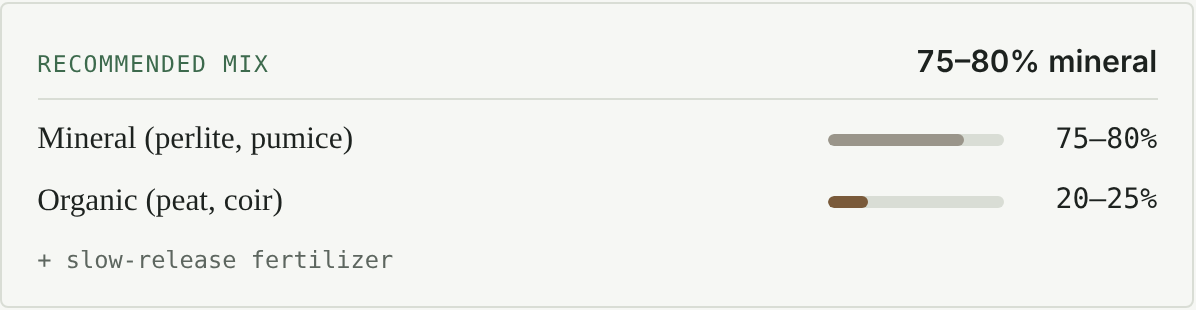
With this one, more mineral wasn’t better. I had it in a 100% mineral mix for a long time. It grew, but very slowly, and only kept going if I fed it all the time. Dorstenia gigas likes more water than most caudex plants, so I’ve recently moved it to 20–25% organic. It’s too early to show results, but the soil now stays usable between waterings instead of drying to bare grit in a day.


Welwitschia mirabilis
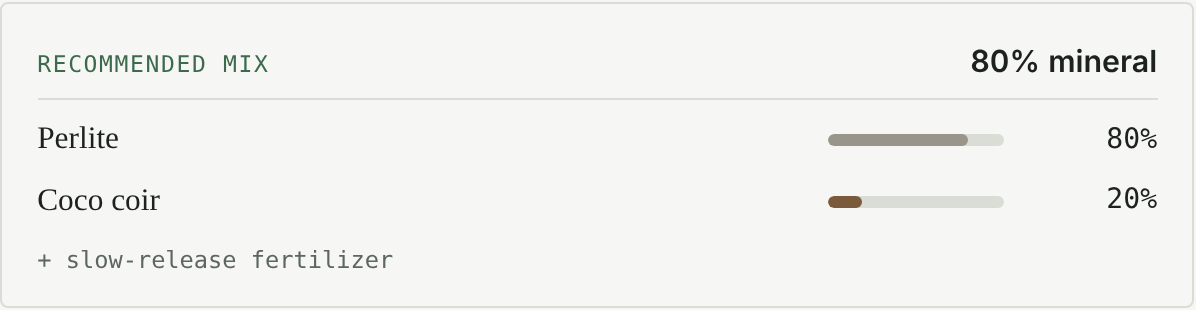
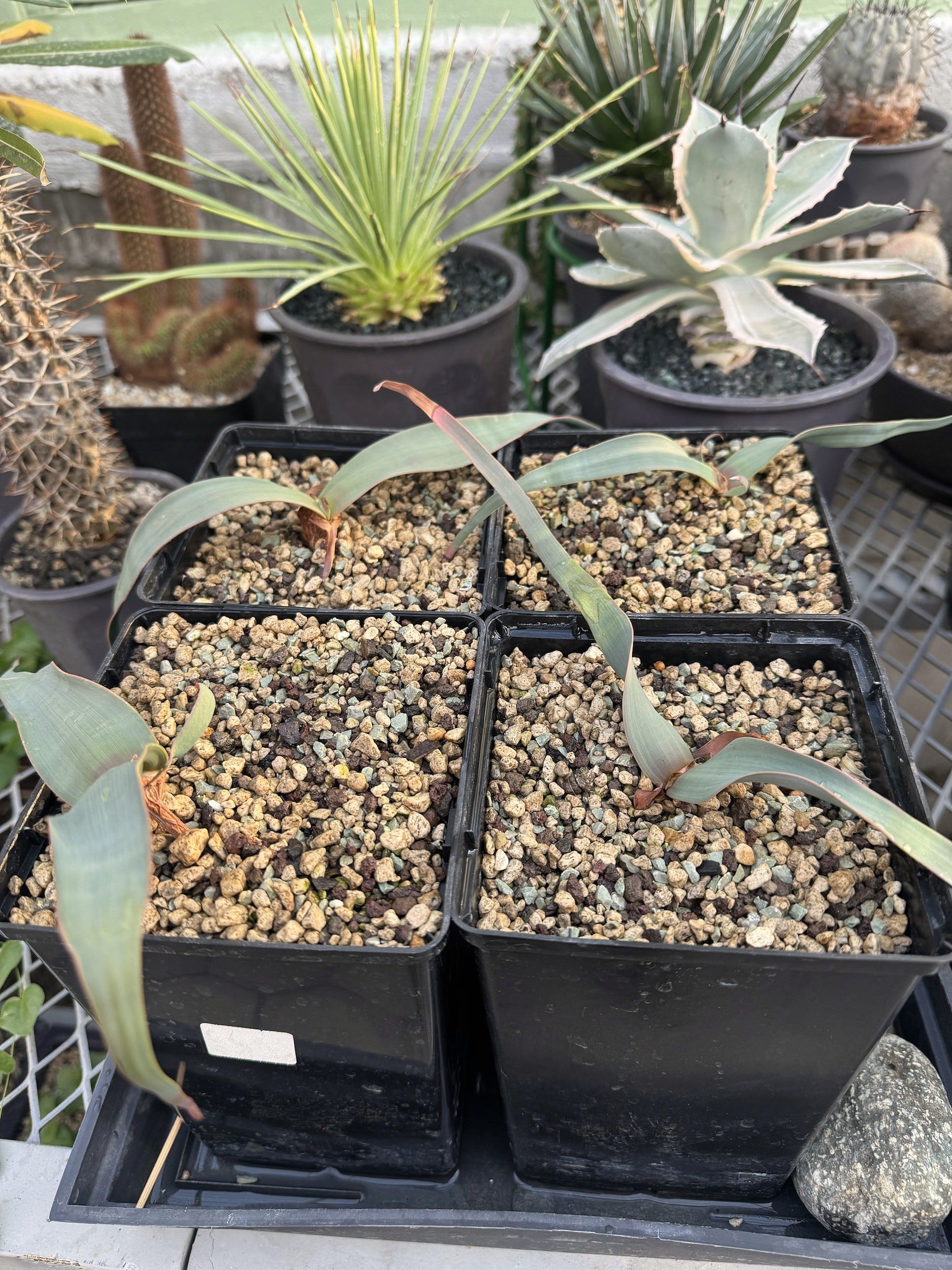
My Welwitschia seedlings germinated in this mix and are still growing in it. It’s simple and they’re doing well. I’ll probably repot the four of them next spring.
Fockea edulis and Euphorbia obesa
I’ve changed my mind on these two. I had my Fockea edulis in a mix with 30% organic, and I now think that was too much. One of them was in the akadama–kanuma–perlite mix. That plant died in a humid balcony winter, so I honestly can’t say whether the mix helped. Euphorbia obesa is the other one. My losses were in summer, in a 70% mineral mix. My feeling is it wanted something grittier, but the losses could have had another cause. Both now go into 80% mineral.
Cactus soil mix: Ariocarpus and Astrophytum
Ariocarpus
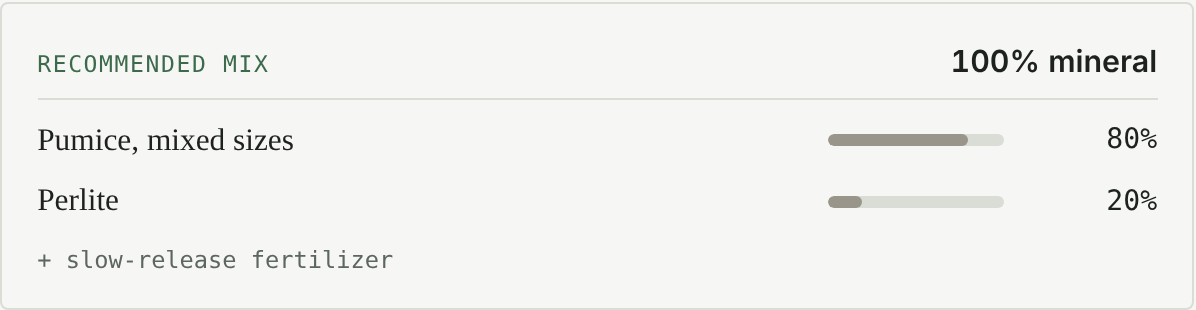
Ariocarpus has a thick taproot that rots easily, so nothing in this pot holds water for long. Mine was sold to me as A. retusus about five years ago. Now that I know the species better, it looks like a hybrid to me.
Astrophytum
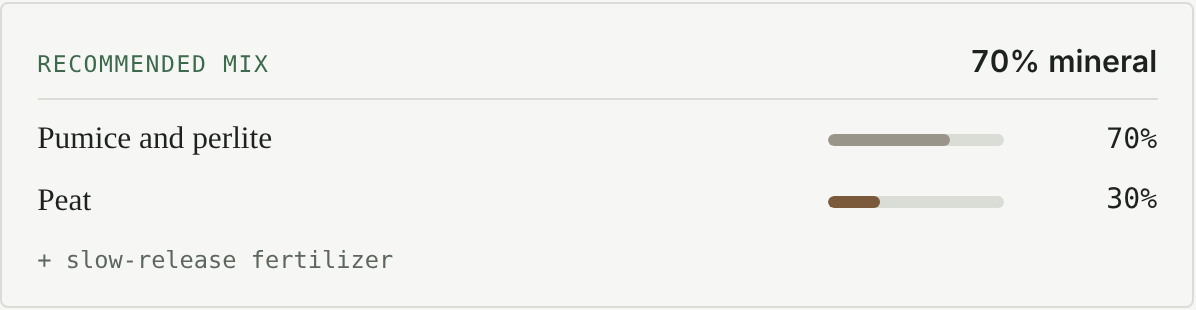
I usually split the mineral part roughly between pumice and perlite, depending on what I have.


Seed sowing mix for caudex plants and cacti
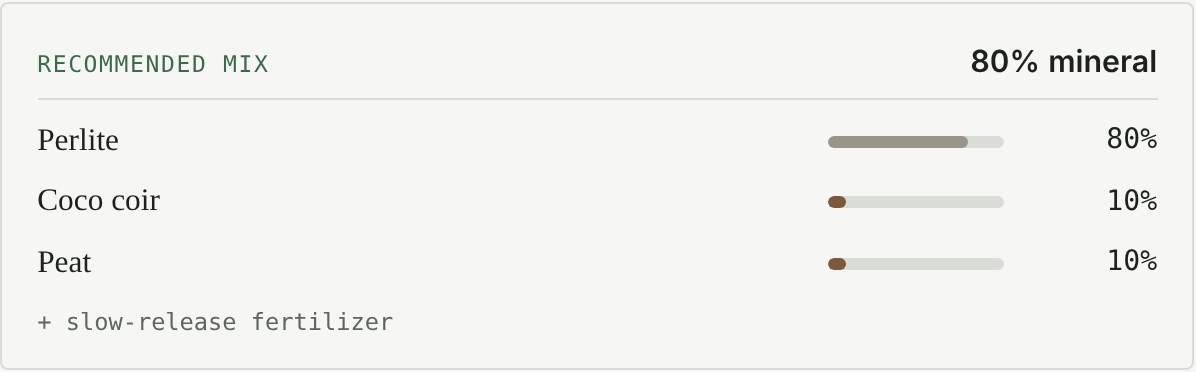
For seed I use shallow rectangular bonsai-style pots. I used to sterilize the mix before sowing. After a few rounds I couldn’t see any difference in germination or losses, only more work, so for the last couple of years I’ve stopped. What I do instead is treat the trays with Physan 20, because constantly wet seed soil grows algae fast. Back when I was propagating a lot, I also rooted cuttings in 100% perlite several times with good results, but I don’t do that any more.
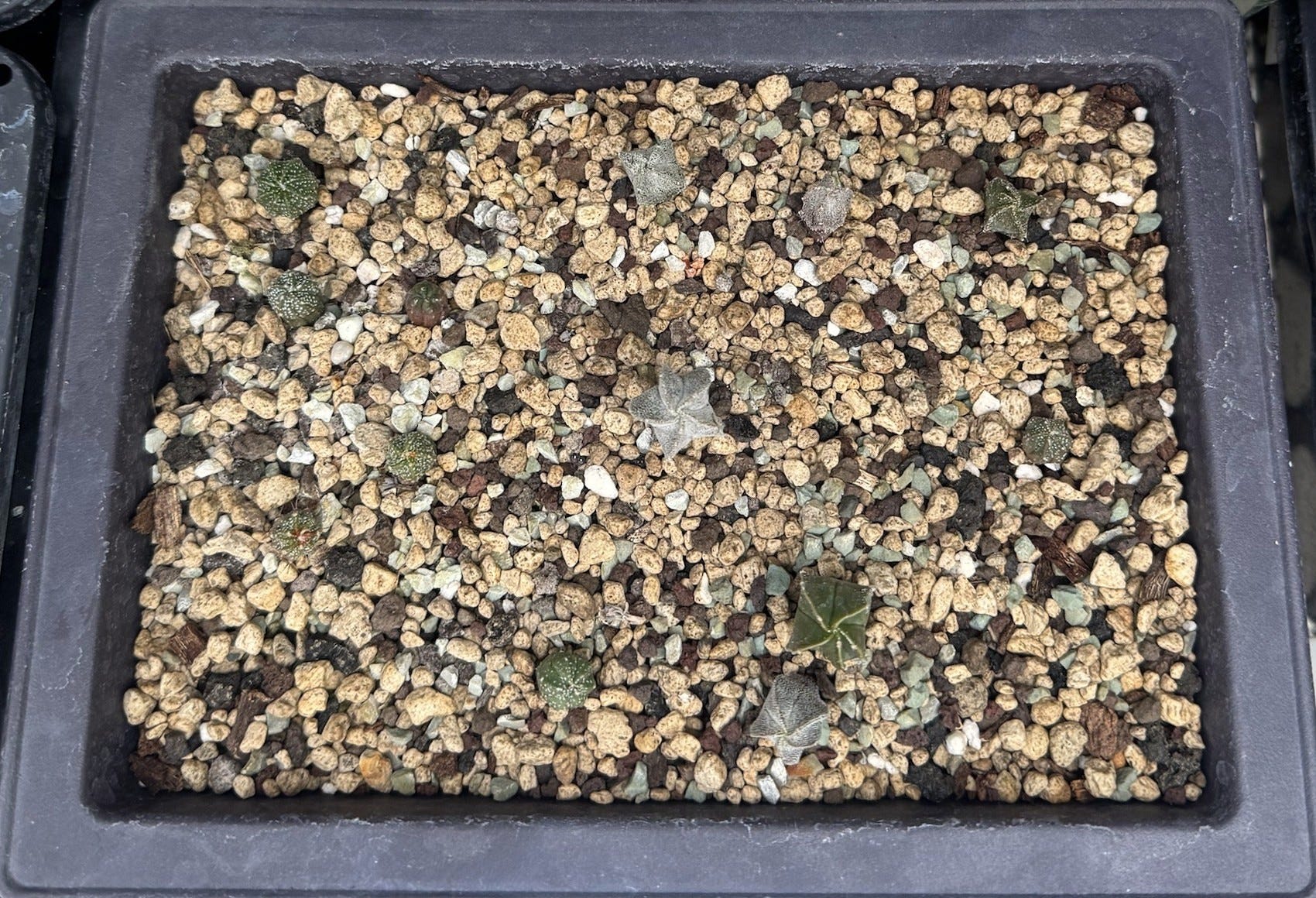
Japanese mixes with akadama and kanuma
Before I settled on my own mixes, I learned a lot from Japanese growers’ blogs. Their recipes are built on two soils that are standard in Japan and rare elsewhere. Akadama is a granular volcanic clay. Each grain soaks up water, while the gaps between grains stay open for air. Kanuma is lighter, softer and acidic, also volcanic. The recipes are written in parts in Japanese; I’ve converted them to rounded percentages.
Akadama–kanuma mix for caudex plants and cacti
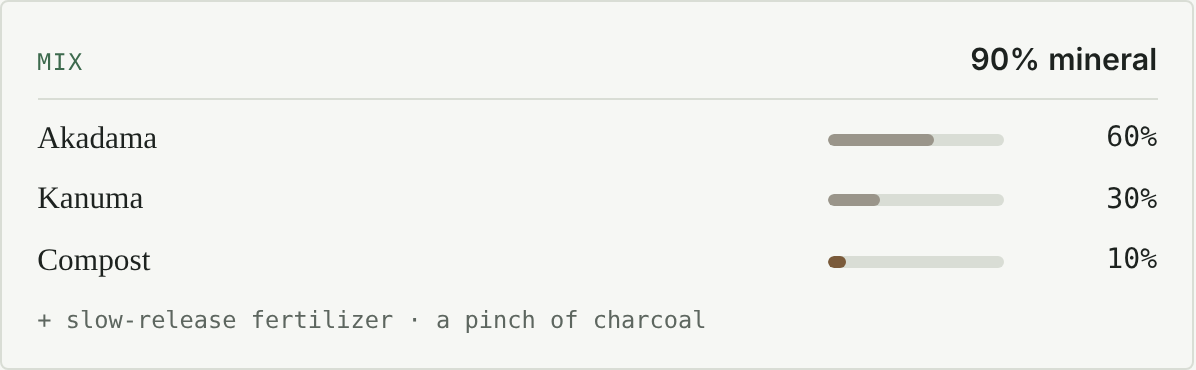
All the cacti I tried it on liked it, mostly Astrophytums, and my Pachypodium namaquanum spent two years in it.
Akadama–kanuma–perlite mix for caudex plants
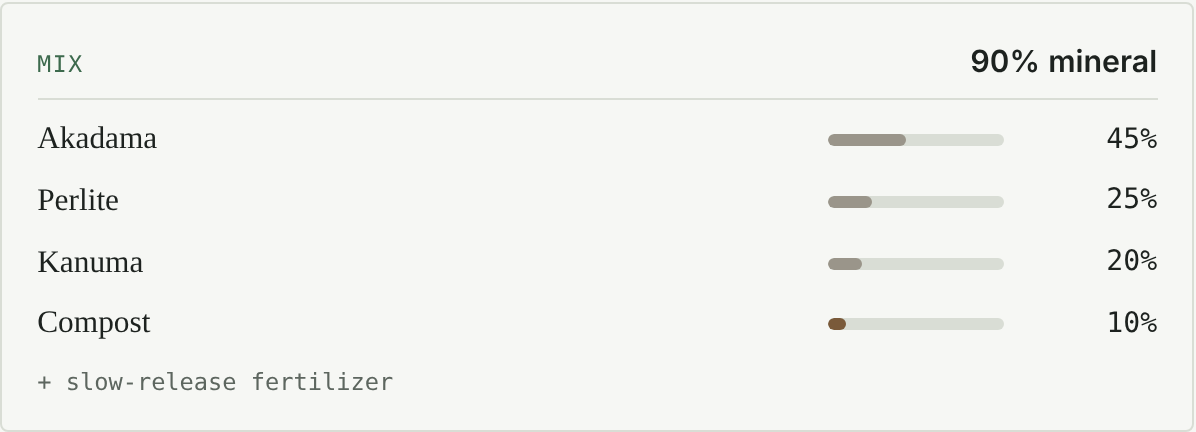
It worked well on the large Pachypodium geayi.
Akadama–kanuma–pumice mix for difficult cacti
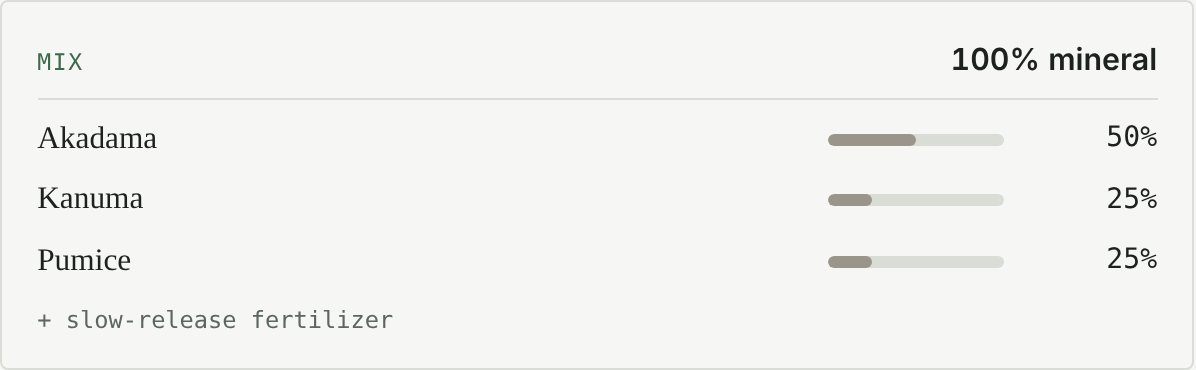
This is the first mix without the compost, with pumice added. It suited my Ariocarpus.
The percentages surprised me. These recipes sound rich because compost is in most of them, but the compost is a small share. All three are 90% mineral or more. Japanese growers keep plants this mineral and rely on akadama to hold water inside the grain. I got to 70–80% mineral by a different route, through losses on the balcony.
I stopped using them because I can’t get kanuma any more, and all the Japanese soils are expensive when you’re filling dozens of pots. I only ever had a few litres of each, enough for a handful of plants. For most growers outside Japan, perlite and pumice with a bit of peat and coir do the same job at a fraction of the cost.
All my soil mixes compared
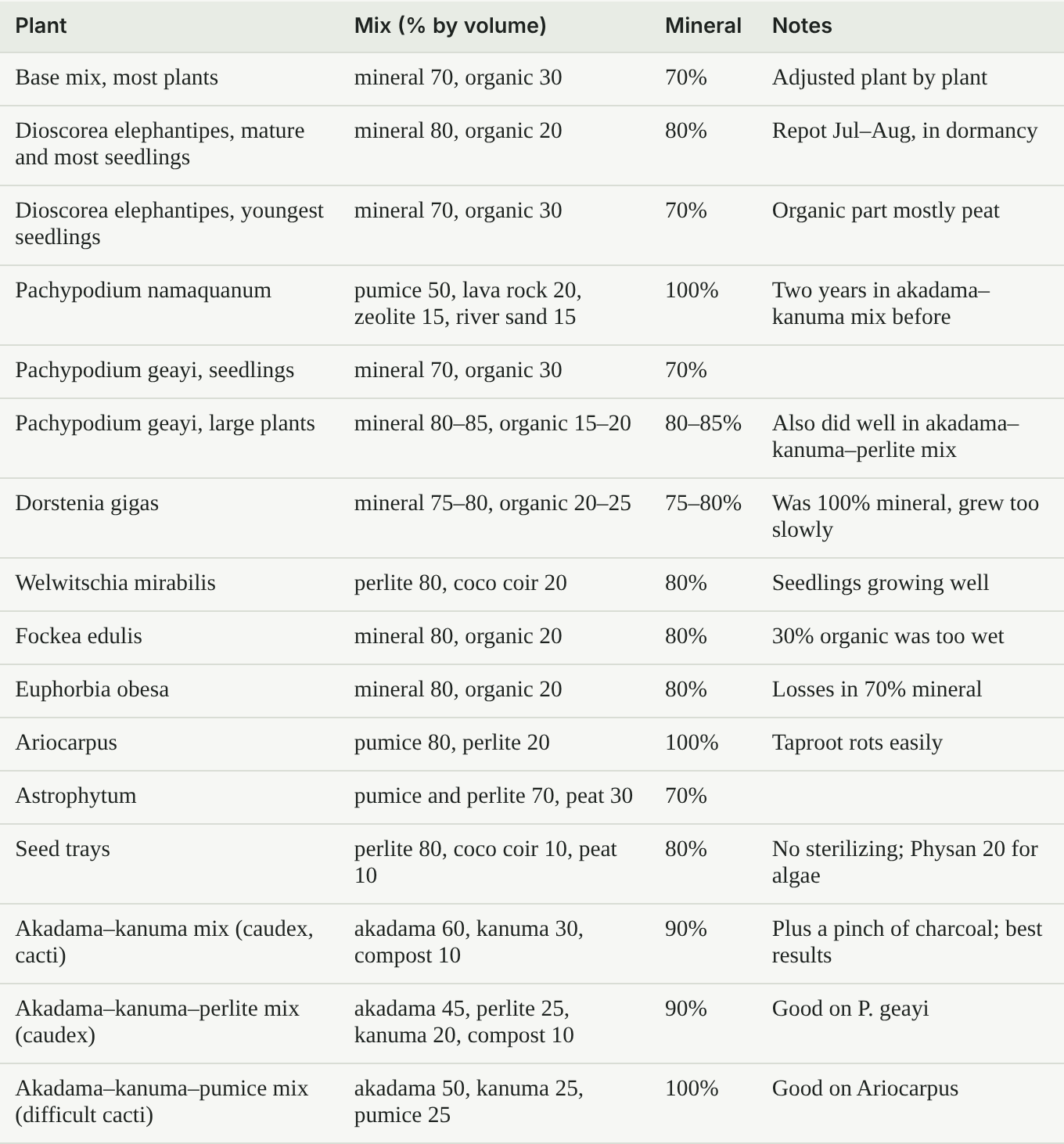
What’s next
The greenhouse heater will hold the minimum at 8°C (46°F) this winter. That’s close to where the balcony sat most winters, minus the couple of weeks near 0°C (32°F), but humidity in a closed greenhouse can still be high. I’ll be watching which pots stay dark and damp longest after watering, and I expect the Dorstenia and the young Dioscorea seedlings to be the ones to keep an eye on. In spring I’ll repot the four Welwitschias and report back on the Dorstenia’s new mix. Minimum winter temperatures for each of these plants are in my winter temperatures post.
If you grow any of these in a mix that works for you, especially Euphorbia obesa or Fockea, I’d really like to hear what’s in it.